
Local SEO for contractors comes down to one question: when someone near you types “roof repair” or “plumber near me” into Google, do they see you, or the guy down the road?
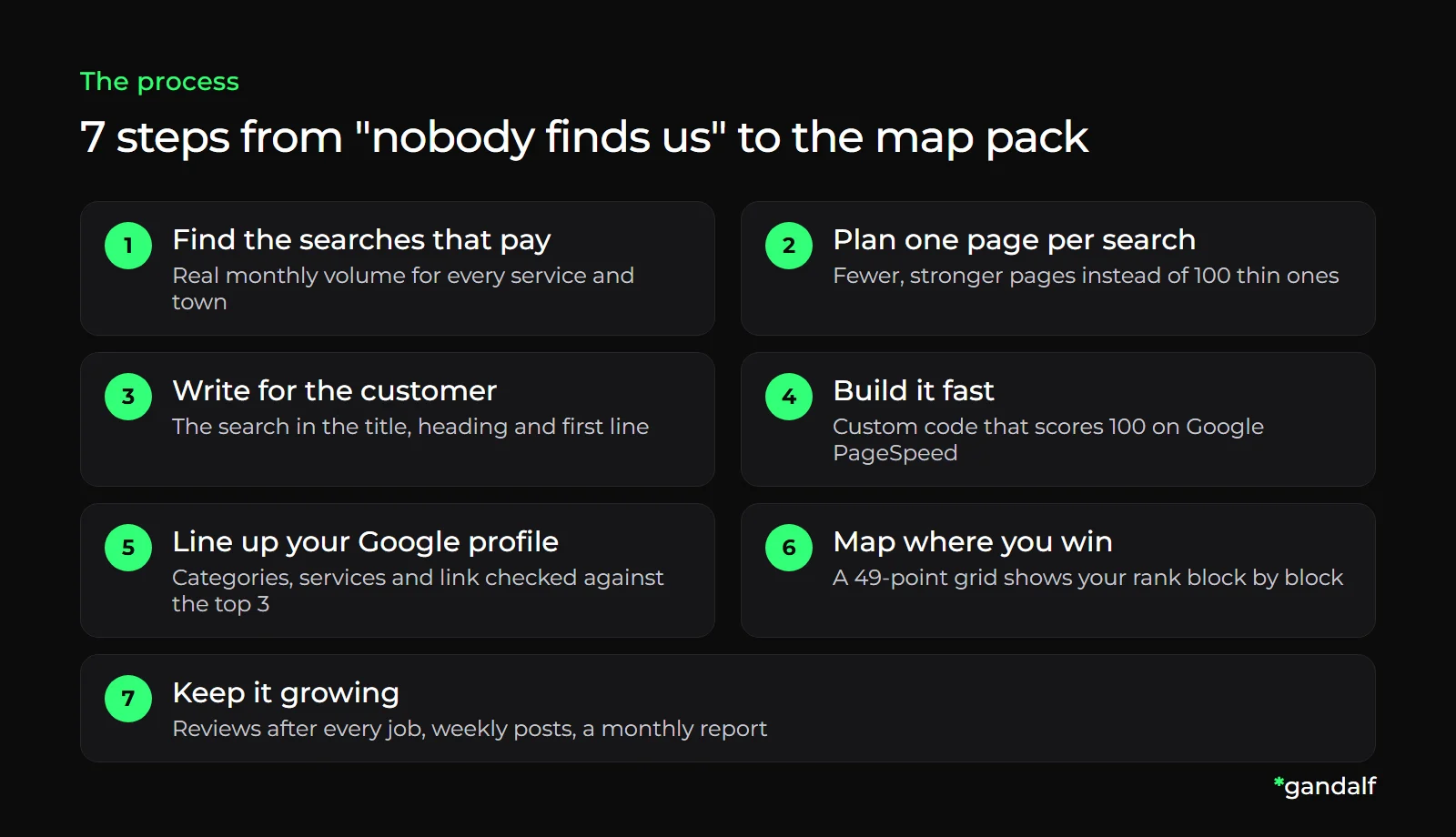
Most web designers guess at the answer. I don’t. Every step below runs on real data: what people actually search, who shows up for it today, and where you rank on the map, block by block. Here’s the whole process, using my own business as the example, because I ran every step on myself this week.
Step 1: Find the searches that pay
Before I write a word, I pull the real monthly search numbers for every service you do and every town you work in. Not guesses, not “SEO tools say it’s popular.” Google’s own keyword data.
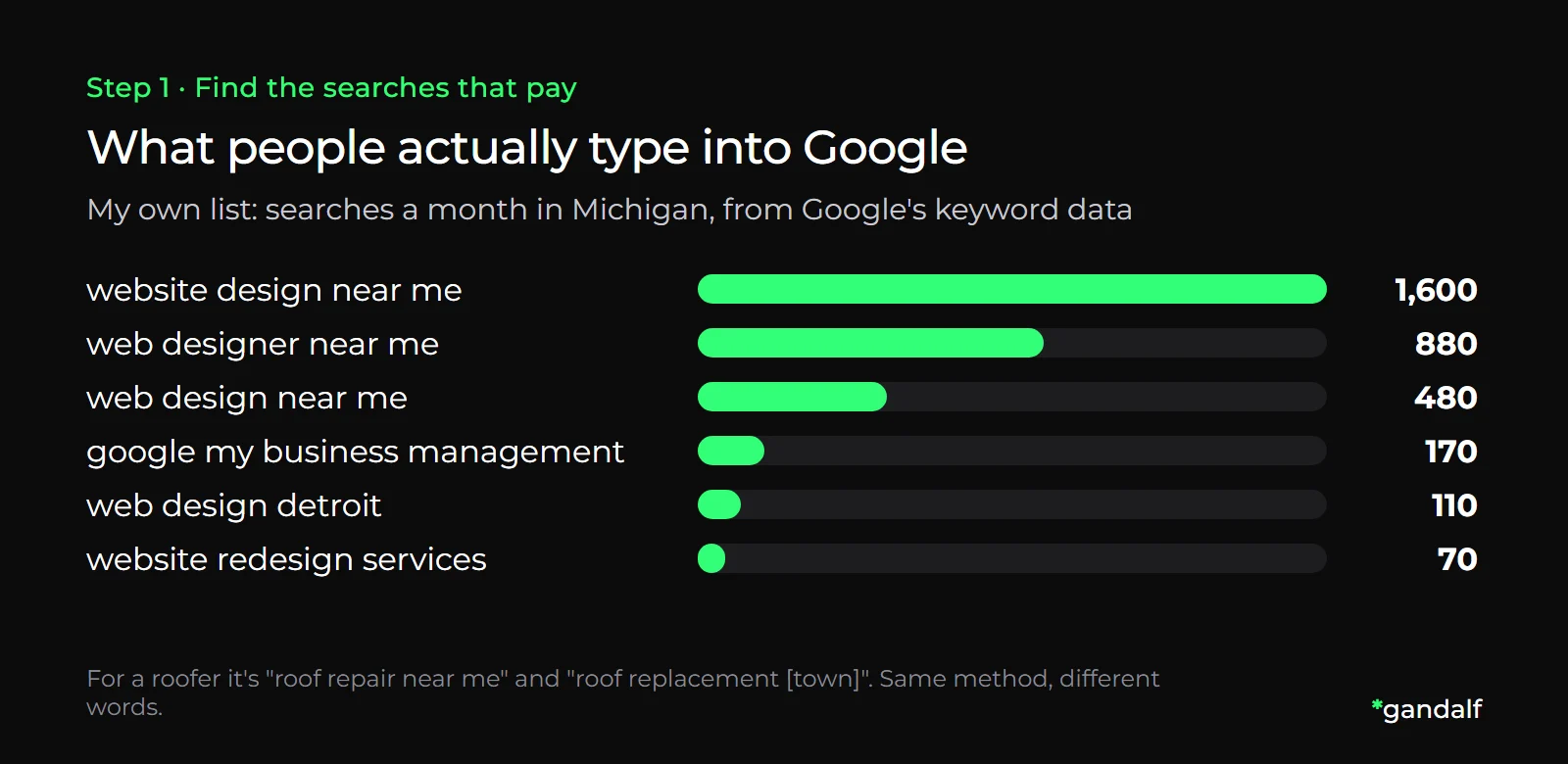
Two things jump out every time:
- “Near me” searches are huge. People don’t type your company name. They type the job and “near me,” and Google decides who’s near.
- The words you use aren’t always the words customers use. You might say “flat roof restoration.” Customers type “flat roof repair.” The page should use their words.
I also check who’s on page one for each search right now. If every result is a big directory like Yelp or Angi, that search is hard to win with a page. If page one is full of small local companies, it’s wide open.
Step 2: Plan one page per search
Each search worth winning gets its own page: one for each service, one for each main town, and a home page that names them all. Searches that mean the same thing share a page.
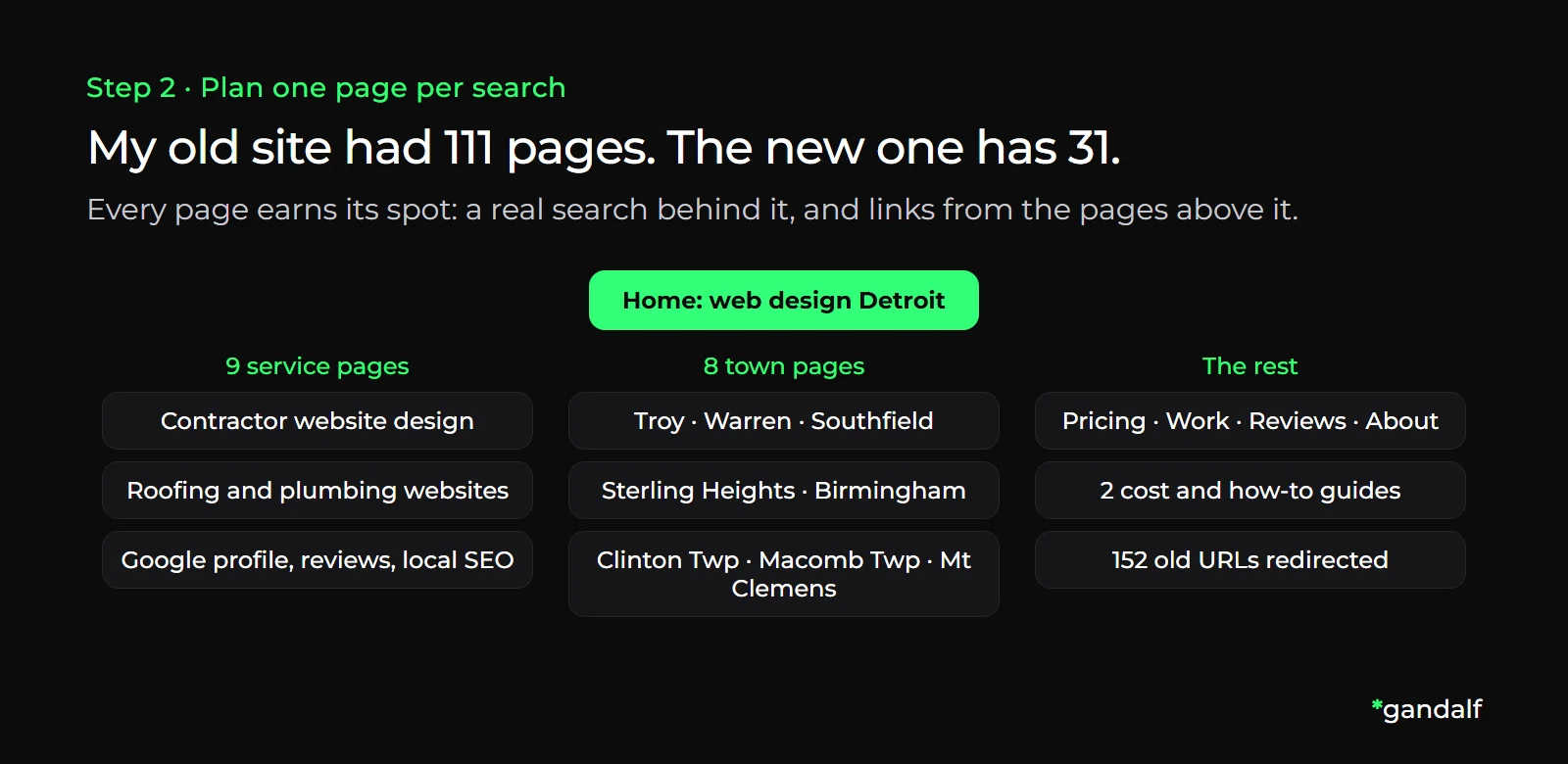
My old site had 111 pages, and most of them were thin copies of each other with the town name swapped. The new one has 31. Fewer, stronger pages beat a pile of weak ones. Every old address gets a redirect to its closest new page, so nothing Google already knew about gets lost.
Step 3: Write each page for the customer
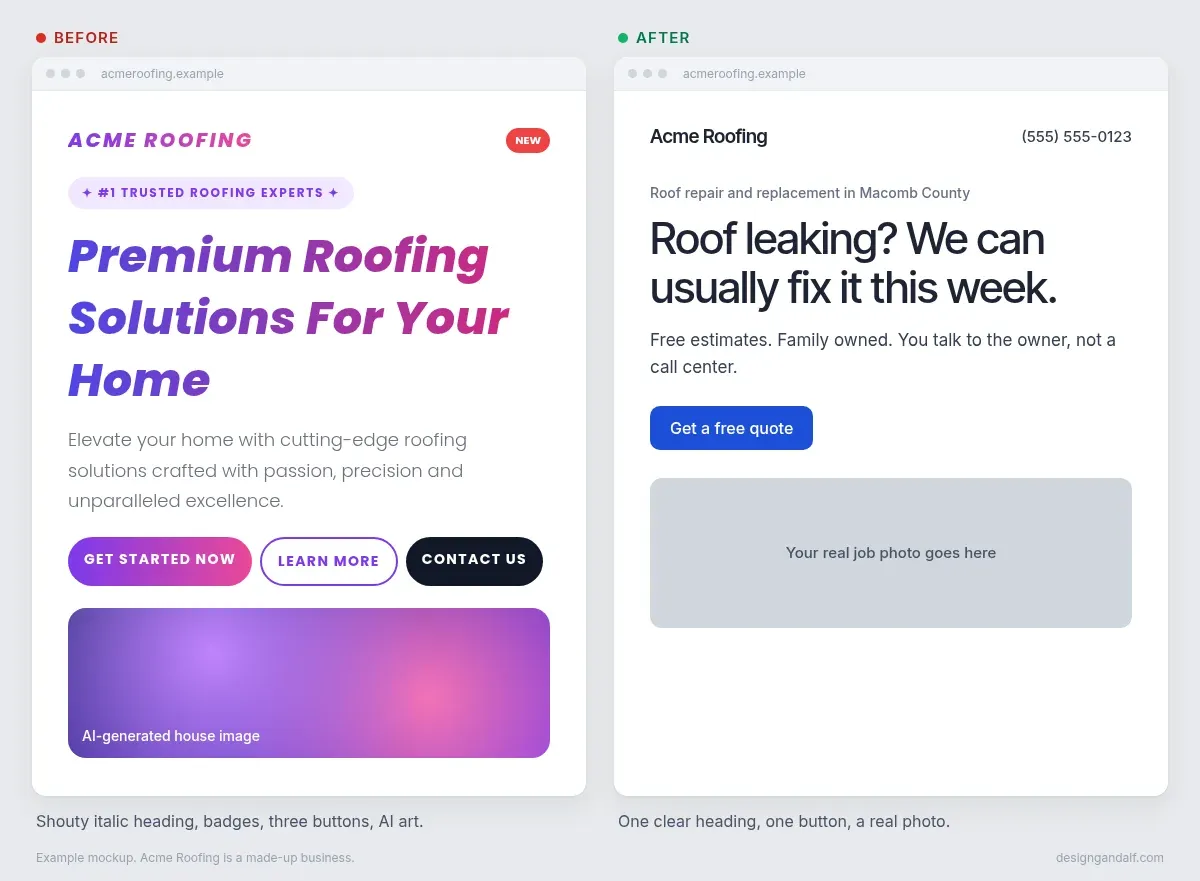
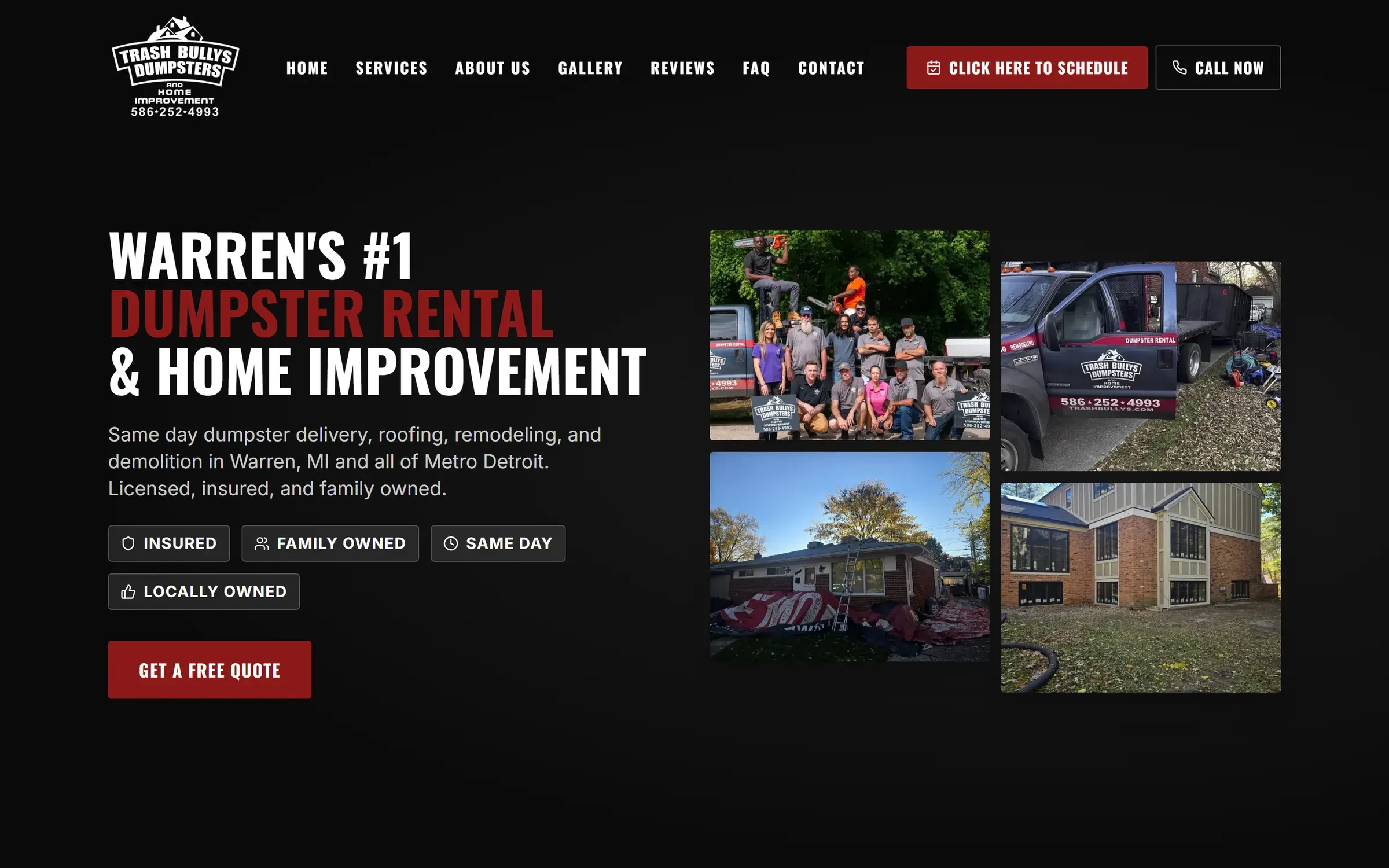
Each page leads with the search it’s built for: in the page title Google shows, in the big heading, and in the first sentence. Then it answers what a customer actually wants to know: what it costs, how long it takes, what’s included and how to reach you.
Every page ends with real questions and answers, because that’s what customers ask before they call, and it’s what Google and AI assistants pull into their answers.
Step 4: Build it fast
A slow site loses the customer before the page even loads. I hand-code every site instead of piling plugins on a template, so it loads fast on a phone.
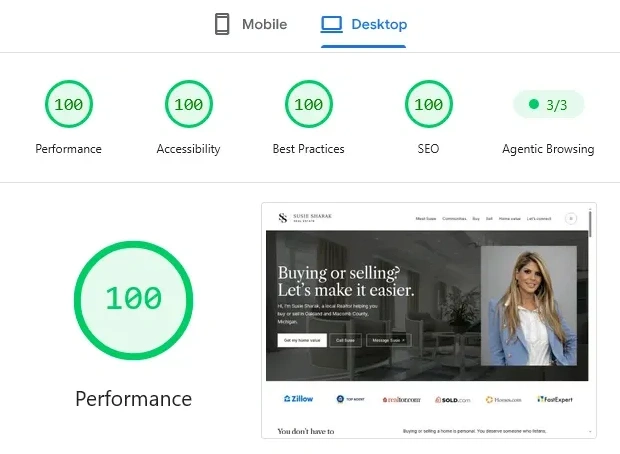
Every page gets tap-to-call and a short quote form, so a customer can reach you in one tap.
Step 5: Line up your Google Business Profile
For most contractors, the Google Business Profile brings in more calls than the website itself, because it’s what shows in the map. I compare yours with the three businesses that beat you on the map, and check six things:
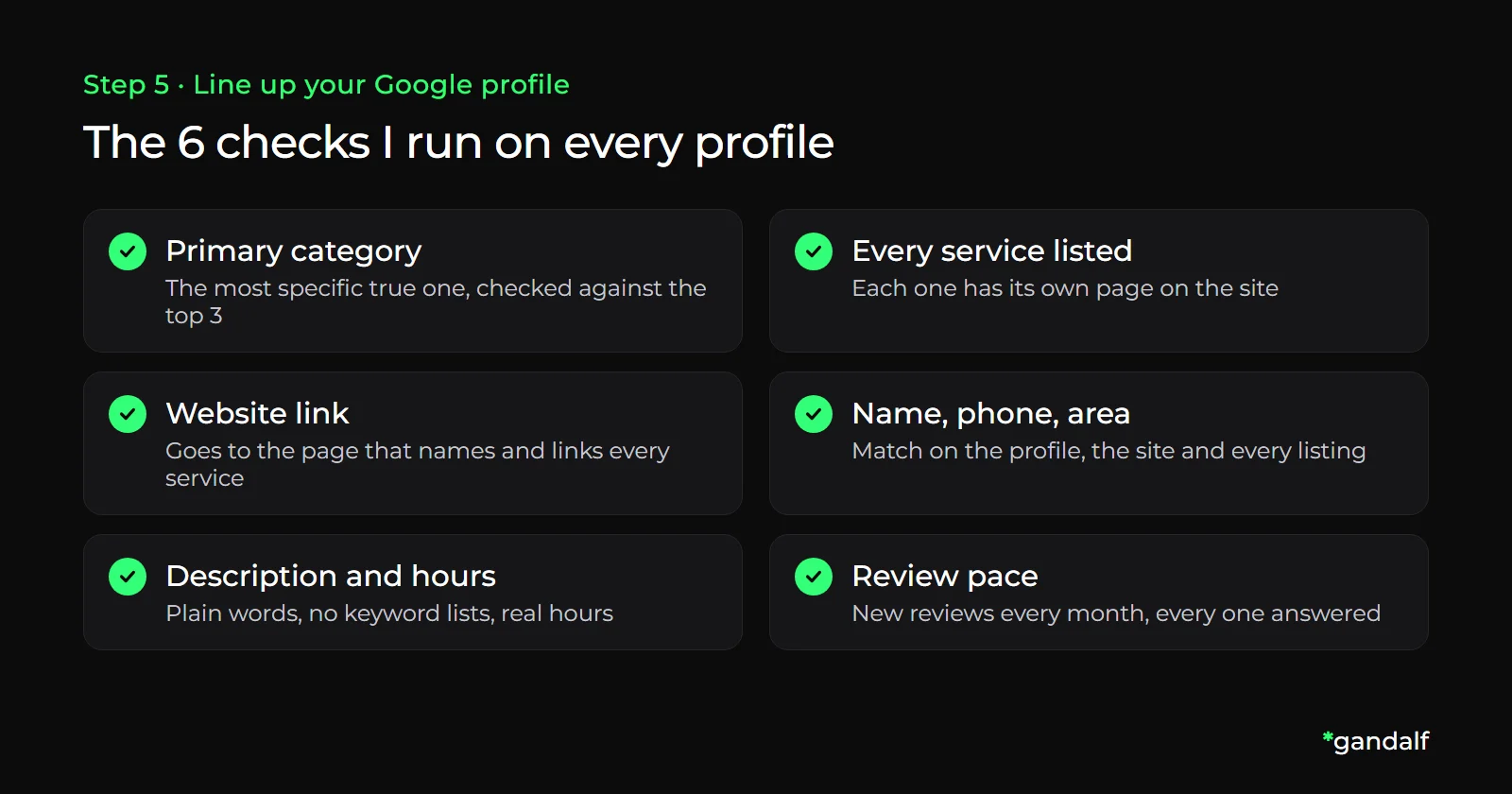
When I ran this on my own profile, it passed most checks. 32 reviews at 5.0 with a reply on every one. But it failed one: no new reviews in 90 days. That’s exactly the kind of thing you’d never notice yourself, and it’s the first thing I’m fixing.
Step 6: Map where you win
Here’s the step almost nobody does. Checking your map rank from one spot tells you almost nothing, because Google ranks you by how close the searcher is. So I search from 49 spots in a grid around you and color each one by where you rank.
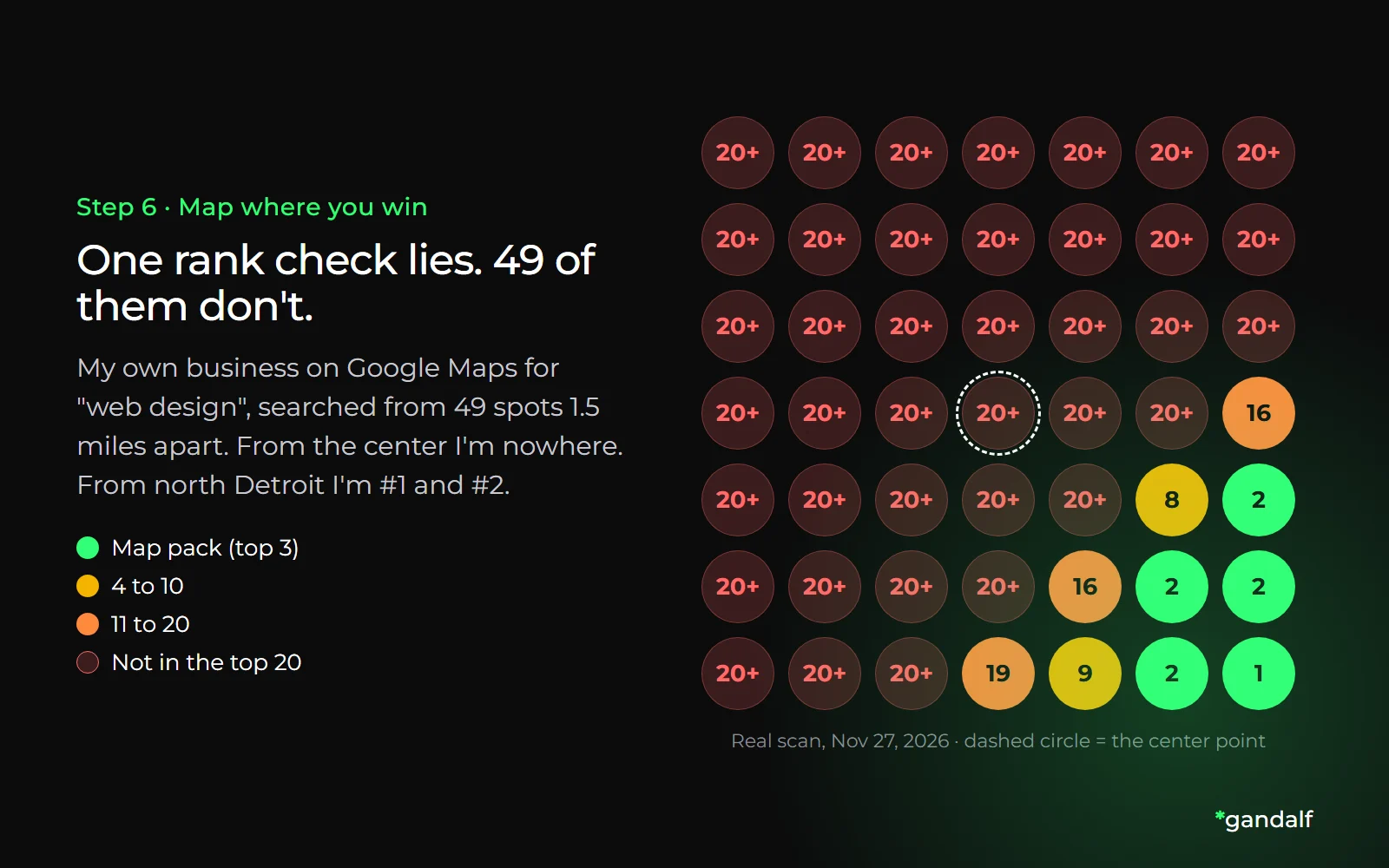
This is my own business, searched this week. A single rank check from the middle of the grid said I wasn’t even in the top 20. The grid tells the real story: I’m #1 and #2 in north Detroit, and I fade out about 3 miles away. Now I know exactly where I’m strong, who beats me on the other side of the map, and what to work on.
For a contractor, this is how you see whether you show up in the towns where the money is, not just the street your shop is on. Then we scan the same grid again in a few weeks and compare.
Step 7: Keep it growing
A site doesn’t rank itself and then stay there. The things that keep moving you up are boring and steady:
- Reviews after every job. A text goes out the day the job’s done, to every customer, with a link straight to your Google review form.
- A post on your profile every week about a real job, with a real photo.
- Real local links: awards, sponsorships and local news, not junk directories.
- A report every month with your Google rankings, your map rank, and your reviews against the top 3, so you can see what’s moving.
Proof it works
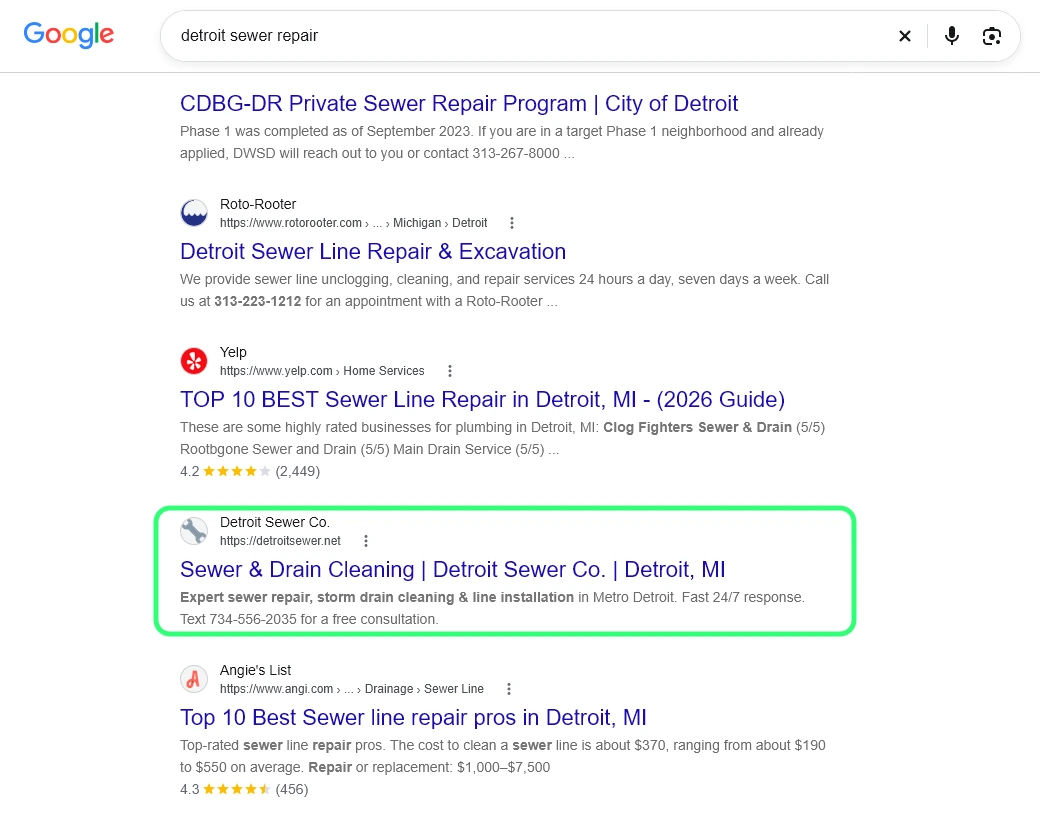
The site I built for Detroit Sewer Co. shows up on page one of Google for “detroit sewer repair,” right under Roto-Rooter and Yelp.
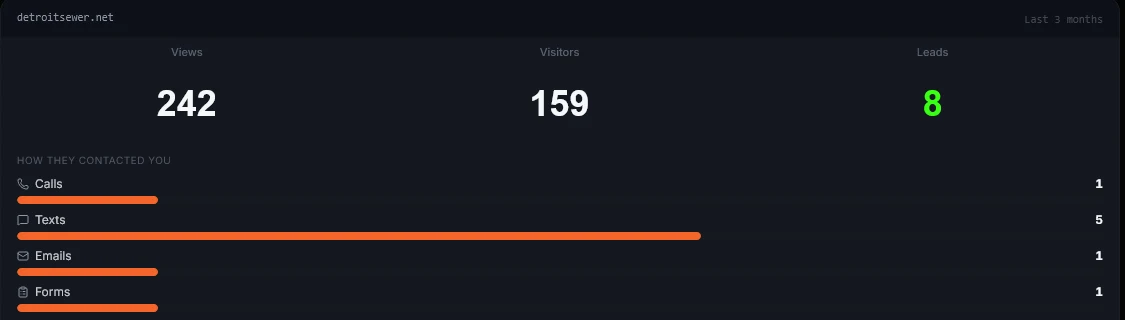
And the tracker on their site shows every lead that comes from it: calls, texts, emails and forms.
What I won’t promise you
No honest company can promise you #1 on Google. Google decides that. What I can promise is that every step is based on real numbers you can see, and that you’ll know where you stand every month instead of guessing.
Want to see where you stand?
I’ll look at your website and your Google profile for free and show you what’s holding you back. Ask for a free website audit, or text me at (313) 801-7388.